We do not accept Medicaid or Medi-Cal


Restore Your Smile After Tooth Loss
Losing a tooth affects more than your appearance. It changes how you chew, how you speak, and over time can cause neighboring teeth to shift and bone loss to occur in the jaw. A dental bridge is a fixed, natural-looking solution that fills the gap left by a missing tooth and restores full function without removable appliances.
At Amigos Dental for Kids & Adults we see walk-in bridge consultation patients every Friday, Saturday, and Sunday. No referral, no lengthy wait. Come in and we'll assess your situation and walk you through your options the same day.
What Is a Dental Bridge and How Does It Work?
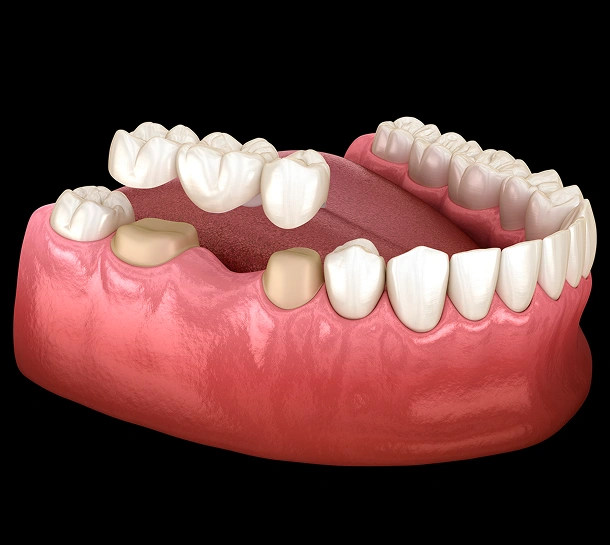
A dental bridge is a fixed restoration that literally bridges the gap where one or more teeth are missing. It consists of one or more artificial teeth, called pontics, held in place by dental crowns cemented onto the natural teeth on either side of the gap. Those supporting teeth are called abutment teeth.
Once placed, a bridge is permanently fixed in your mouth. It does not come in and out like a partial denture. It looks, feels, and functions like your natural teeth, and with proper care can last 10–15 years or longer.
The three components of a traditional bridge:
- Abutment Teeth The natural teeth on either side of the gap are shaped and fitted with crowns that anchor the bridge securely in place.
- Pontic (Artificial Tooth) The replacement tooth that fills the gap. Pontics are custom-made to match the size, shape, and color of your surrounding teeth for a seamless result.
- Dental Crowns The crowns on the abutment teeth hold the entire bridge together and distribute biting forces evenly across the restoration.
When a bridge may not be the first recommendation
If the teeth on either side of the gap are healthy and untouched, your dentist may discuss implant options to avoid altering those teeth. We'll always give you an honest assessment of all available options so you can make the right decision for your long-term oral health.
Why You Shouldn't Leave a Missing Tooth Untreated
It can be tempting to leave a gap, especially if it's not visible when you smile. But missing teeth have consequences that go beyond aesthetics and tend to worsen over time the longer they're left unaddressed.
- Shifting teeth Neighboring teeth naturally drift toward a gap over time. This can lead to crowding, spacing changes, and bite problems that become increasingly difficult and expensive to correct.
- Bone loss The jawbone beneath a missing tooth begins to deteriorate without the stimulation a tooth root provides. Over time this can affect the shape of your jaw and face and make future tooth replacement more complicated.
- Bite changes and jaw strain When teeth shift or bone is lost, your bite changes. This can lead to uneven wear on remaining teeth, jaw pain, and strain on the jaw joint.
- Difficulty chewing Missing back teeth in particular affect your ability to chew properly, which can impact digestion and nutrition over time.
- Self-confidence Missing teeth, regardless of their location, affect how many people feel about their smile and their willingness to speak and laugh freely.
Addressing a missing tooth sooner rather than later is always the better long-term decision. A bridge is one of the most proven and accessible ways to do that.
What Happens During the Dental Bridge Process
Getting a dental bridge typically involves two visits. Here's a clear picture of what to expect:
Examination & X-Ray
We'll thoroughly examine the gap and the surrounding teeth, take X-rays to assess bone health and root structure, and confirm that a bridge is the right treatment for your situation.
Preparing the Abutment Teeth
is taken of the prepared teeth and the gap. This is sent to a dental lab where your custom bridge is fabricated to fit your mouth exactly, matching the shape, size, and color of your surrounding teeth.
Impressions
We take a precise impression of the prepared tooth and surrounding teeth. This is sent to a dental lab where your custom crown is fabricated to fit your bite exactly.
Temporary Bridge
A temporary bridge is placed to protect the prepared teeth and fill the gap while your permanent bridge is being made. Avoid hard or sticky foods on that side during this period.
Temporary Bridge
A temporary bridge is placed to protect the prepared teeth and fill the gap while your permanent bridge is being made. Avoid hard or sticky foods on that side during this period.
Finalizing Your Dental Bridge
When your permanent bridge is ready, typically one to two weeks later, you'll return to have the temporary removed and the permanent bridge fitted. We'll check the fit, bite, and appearance carefully before cementing it permanently in place.
It may take a few days to fully adjust to the feel of your new bridge, this is completely normal. Most patients find it feels natural very quickly.
How to Care for Your Dental Bridge
With proper care, a dental bridge can last for many years. To keep it in great shape:
- Brush daily and pay close attention to the gumline around the bridge.
- Clean beneath the bridge using a floss threader, interdental brush, or water flosser.
- Avoid hard and sticky foods that could damage or loosen the restoration.
- Wear a night guard if you grind your teeth to protect your bridge from excess force.
- Keep up with regular checkups so we can monitor your bridge and oral health.
Good oral hygiene and routine dental visits are the keys to maximizing the life of your dental bridge.
Walk In Any Weekend for a Bridge Consultation — Los Angeles
Serving patients across Los Angeles including Westlake, Echo Park, Koreatown, Silver Lake, Downtown LA, and surrounding neighborhoods.
Hours:
Monday - Tuesday: Closed
Wednesday - Thursday: By Appointment Only
Friday - Sunday: 11:00 am – 07:00 pm
Monday - Tuesday: Closed
Wednesday - Thursday: By Appointment Only
Friday - Sunday: 11:00 am – 07:00 pm
Walk-ins welcome. Emergency calls accepted 24/7.